Why Pre-Sales Are Becoming Housing Delivery Infrastructure

Martin ma
Founder of RealtyCMS

We often measure housing supply by approvals.
How many homes have been approved?
How many projects are in the pipeline?
How many dwellings are theoretically possible under current planning controls?
But approvals are only the beginning.
An approval is a planning milestone — not delivered supply.
For a project to move from approval into construction, and eventually into completed homes, developers need far more than a DA or planning pathway. They need:
- feasibility,
- funding,
- confidence,
- and increasingly, evidence that the market is ready to absorb the product.
That is where pre-sales are changing from a sales metric into something much more important.
Pre-sales are no longer “just sales”
Traditionally, pre-sales were viewed as a commercial milestone:
How many apartments, lots or packages were sold before completion?
Today, they are becoming part of the infrastructure that supports housing delivery itself.
Because pre-sales influence finance.
For many build-to-sell developers, construction finance is closely tied to pre-sales performance. Financiers do not simply ask whether a project has been approved.
They ask:
- Are buyers genuinely responding?
- Are contracts progressing?
- Is demand real and financeable?
- Is there enough market confidence to reduce delivery risk?
In other words:
Pre-sales are becoming a proxy for project confidence.
They tell financiers the market is responding.
They tell developers whether product-market fit is working.
They tell capital partners whether risk is reducing.
They tell project teams whether capital can be recycled into the next project.
The industry challenge is no longer only planning
The housing conversation often focuses on approvals and planning reform.
But the reality is more complicated.
The industry is operating under:
- higher construction costs,
- tighter margins,
- more expensive debt,
- and greater uncertainty around buyer behaviour.
In this environment, every weak demand signal matters.
A project may be:
- approved,
- strategically located,
- and genuinely needed by the market.
But if buyer demand cannot be demonstrated early enough, the project can still struggle to proceed.
That is why demand visibility is becoming critical.
The hidden operational gap
The industry already tracks final sales outcomes reasonably well.
What it struggles with is the operational layer before those outcomes happen.
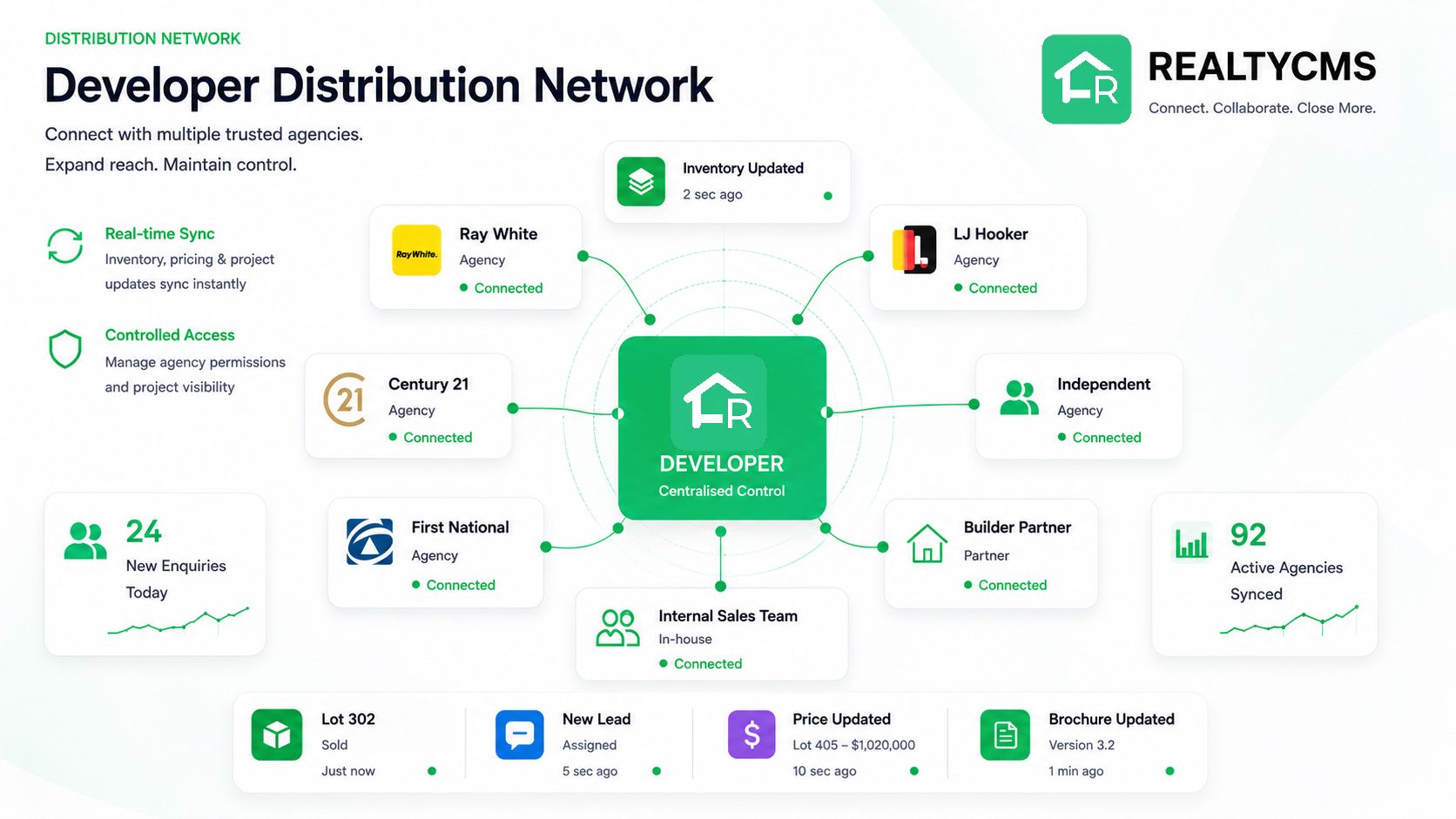
Buyer activation today is often fragmented across:
- portals,
- agents,
- builder networks,
- spreadsheets,
- CRMs,
- emails,
- and WhatsApp groups.
That fragmentation creates a visibility problem.
Developers may have activity in market, but not a clear view of it.
Agents may be generating enquiries, but the quality of those enquiries may not be structured or measurable.
Channel partners may be promoting stock, but developers may not know which channels are actually creating momentum.
Buyers may be engaging with projects, but that engagement may never become usable pre-sales evidence.
Developers do not just need more leads
The next challenge for housing delivery is not simply generating more enquiries.
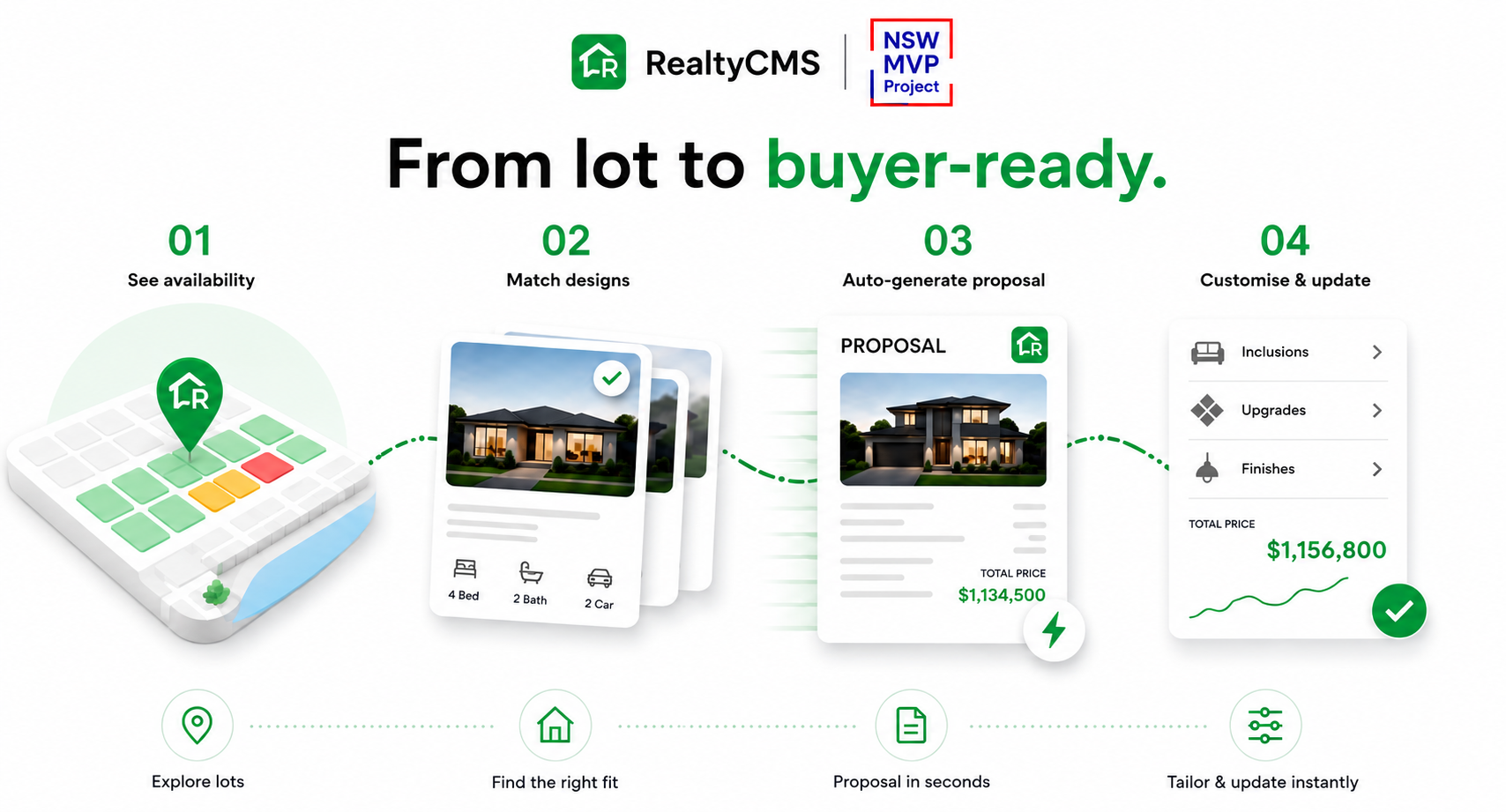
Developers increasingly need visibility into the entire activation journey:
- inventory → enquiry,
- enquiry → qualified buyer,
- qualified buyer → reservation,
- reservation → contract,
- contract → finance-ready evidence.
This requires better systems — but also a different mindset.
Pre-sales should not be treated as a late-stage reporting number.
They should be treated as an early indicator of delivery readiness.
A better demand visibility layer
A more structured pre-sales evidence layer could help answer questions such as:
- Which stock is receiving the strongest demand?
- Which buyer segments are responding?
- Which channels are producing qualified enquiries?
- Which projects are at risk of slow absorption?
- How close is the project to finance-ready pre-sales?
- Where is the operational friction between sales, marketing, finance and channel partners?
These are not just sales questions anymore.
They are delivery questions.
Because housing delivery today is increasingly shaped by:
- capital confidence,
- buyer confidence,
- financing certainty,
- and the speed at which approved stock can move into market absorption.
Approvals create possibility. Demand creates momentum.
Planning reform matters.
Approvals matter.
But approvals alone do not create homes.
Between approval and construction sits a less visible — but increasingly critical — operational layer:
- live inventory,
- buyer activation,
- channel coordination,
- pre-sales evidence,
- and reporting visibility.
This layer may not attract the same attention as planning policy or construction activity.
But without it, many approved projects will continue to struggle to move forward.
Because the key question remains:
Can the market demonstrate enough confidence, early enough, for the project to proceed?
That is why pre-sales are becoming more than a sales metric.
They are becoming part of the infrastructure of housing delivery itself.