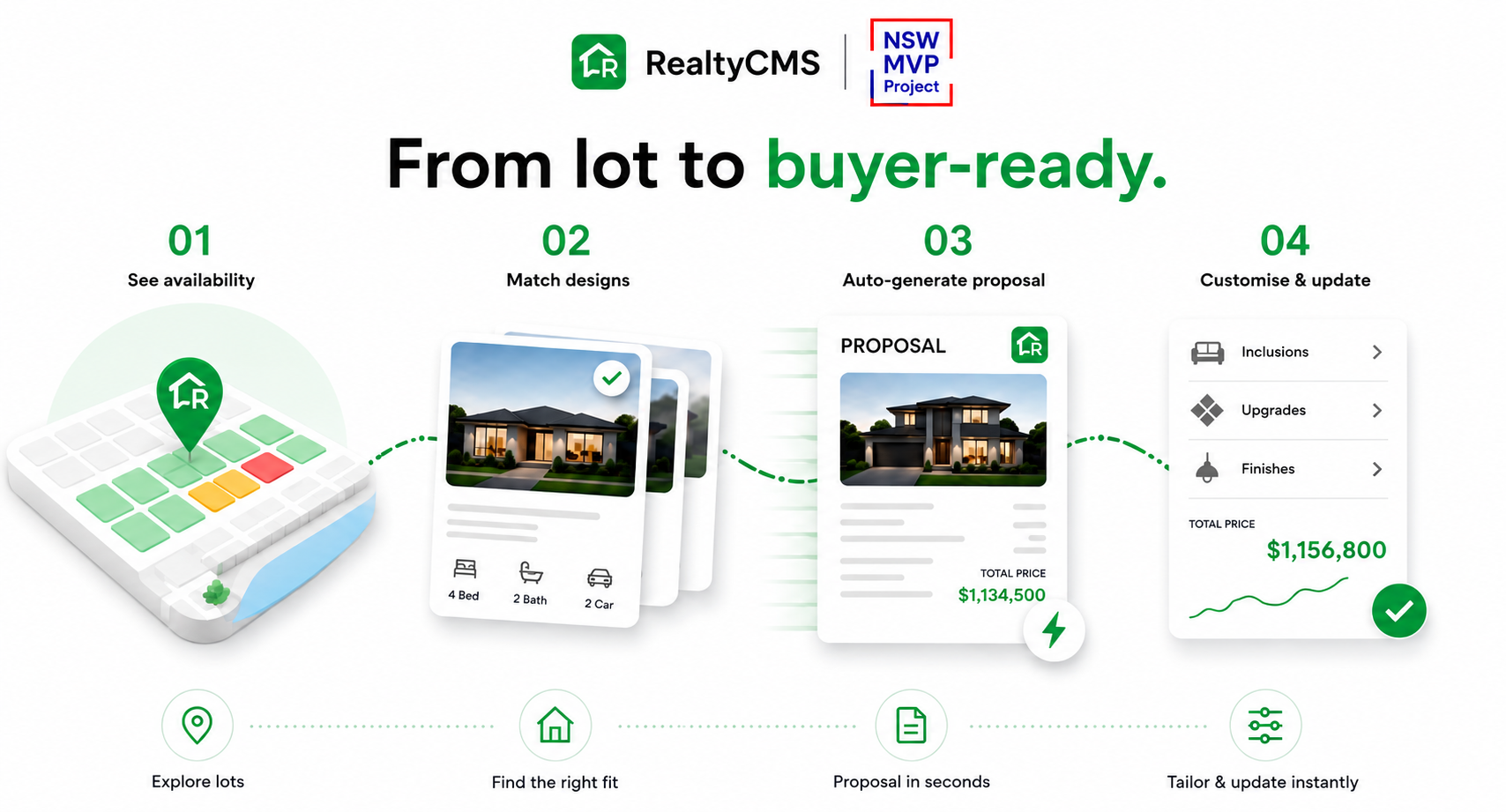
How Developers Scale Through Multi-Agency Distribution

Nancy Xiao
Accounts Manager
In today’s Australian property market, relying on a single sales agency is no longer enough to maximise project exposure and sales velocity.
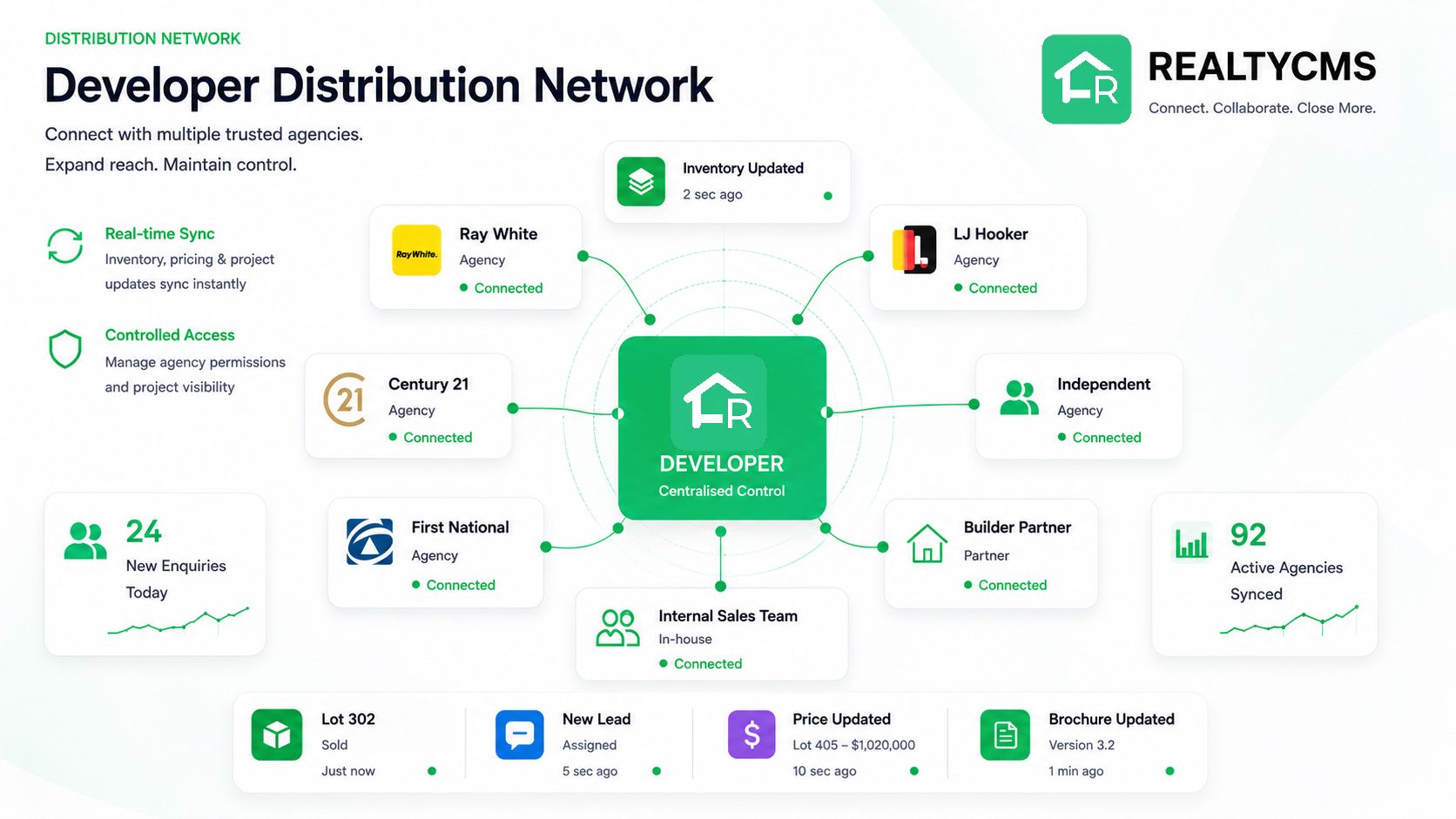
More developers are now adopting a multi-agency distribution strategy — allowing multiple trusted agencies to promote the same project simultaneously while maintaining control over inventory, branding, and communication.
But scaling through multiple agencies also introduces operational challenges.
Without the right systems, developers often face:
- Outdated inventory being circulated
- Inconsistent marketing materials
- Duplicate buyer enquiries
- Loss of control over pricing and project information
- Difficulty tracking which agencies are performing
- Manual coordination across emails, spreadsheets, and PDFs
This is where modern project distribution platforms are changing the industry.
Why Multi-Agency Distribution Matters
The reality is simple:
Different agencies attract different buyer audiences.
Some agencies dominate:
- local owner-occupier markets
- overseas investors
- first-home buyers
- luxury buyers
- specific language communities
- specific geographic regions
By expanding distribution across multiple agencies, developers can significantly increase project reach and buyer engagement.
Instead of depending on one sales channel, developers create a scalable distribution network.
The result:
- faster exposure
- more buyer enquiries
- improved sales momentum
- reduced project risk
The Traditional Problem
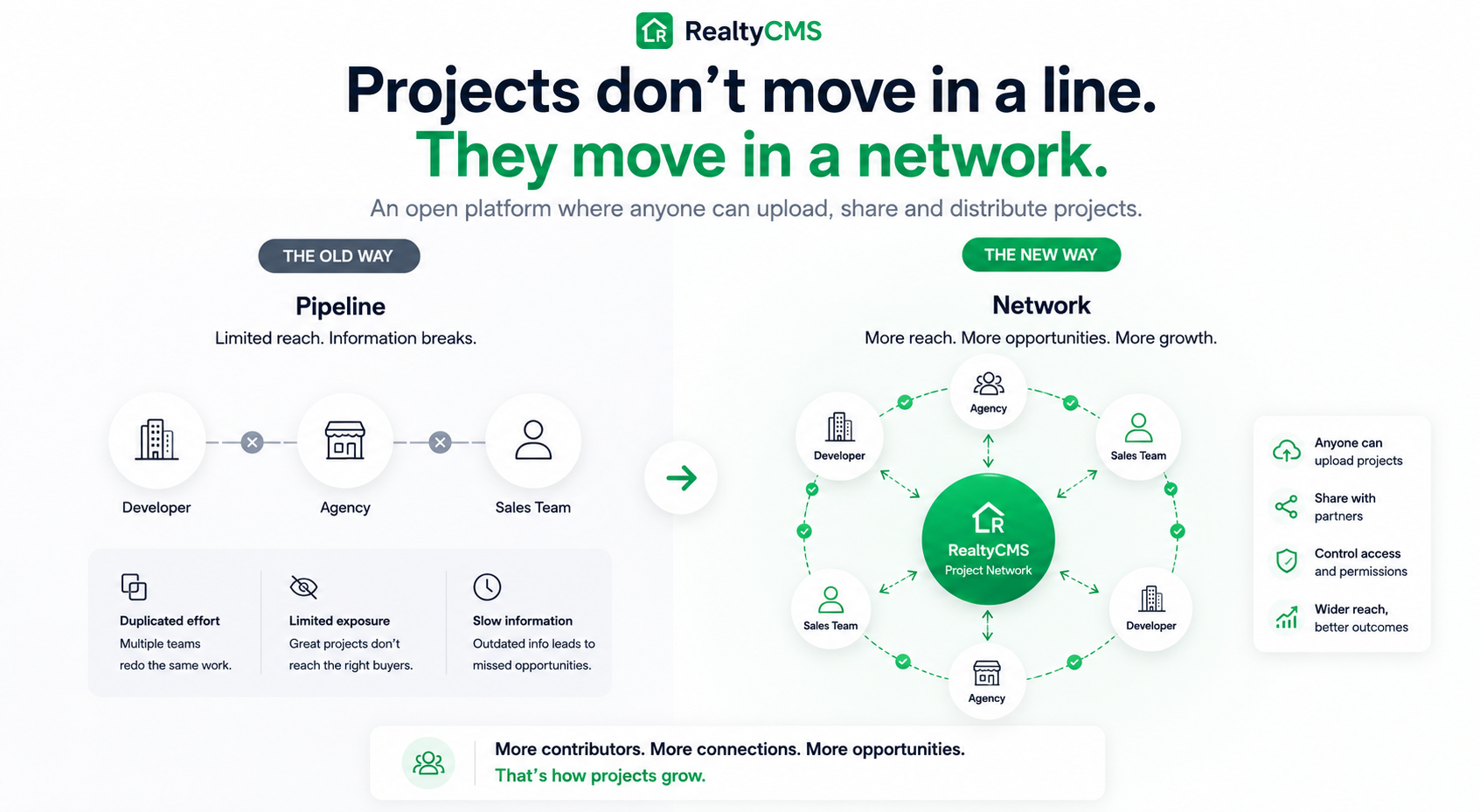
Historically, multi-agency sales have been difficult to manage.
Many developers still rely on:
- email attachments
- Dropbox folders
- static brochures
- manually updated price lists
- spreadsheets sent between teams
This creates major problems.
Once materials are distributed, developers lose visibility and control.
Agencies may accidentally:
- use outdated pricing
- promote sold lots
- circulate incorrect floorplans
- display old incentives
- present inconsistent branding
As the project grows, administration becomes overwhelming.
Real-Time Distribution Is Changing the Industry
Modern project distribution platforms now allow developers to manage agencies in real time.
Instead of manually sending updates, developers can:
- update inventory once
- sync changes instantly
- control which agencies can access specific projects
- monitor agency activity centrally
- maintain a single source of truth
This transforms project sales from fragmented coordination into a scalable digital workflow.
Maintaining Control While Expanding Reach
One of the biggest concerns developers have with multi-agency distribution is:
“How do we expand exposure without losing control?”
Developers can:
- authorise specific agencies
- control visibility
- manage branding centrally
- revoke access instantly
- distribute updated materials automatically
This allows developers to scale confidently while protecting project integrity.
The Future of Project Sales Networks
The Australian property market is becoming increasingly connected.
Developers, agencies, and builders are moving toward collaborative ecosystems where:
- inventory updates in real time
- projects are shared digitally
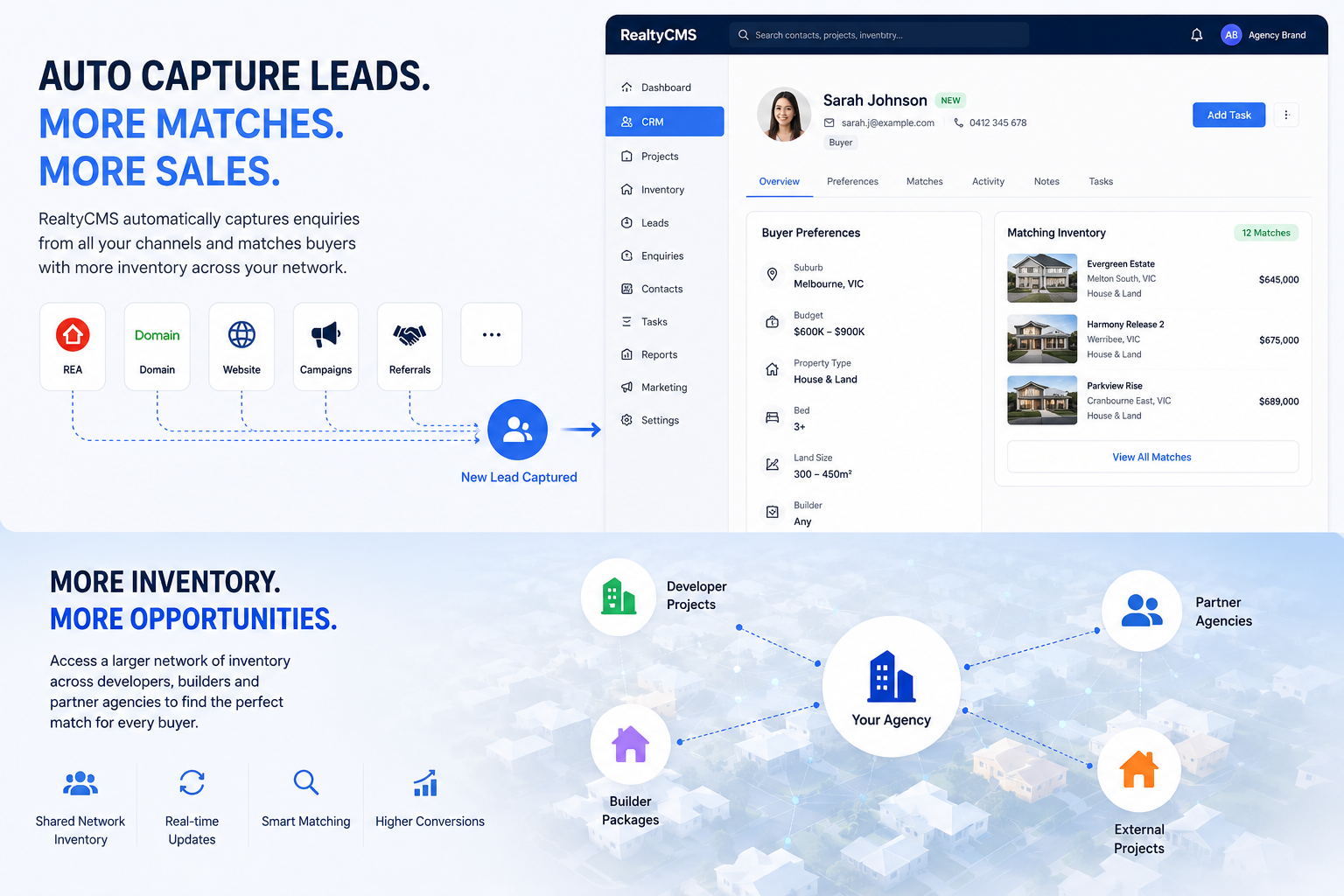
- buyer leads flow automatically
- marketing materials stay synchronised
- distribution networks scale without operational chaos
The future is not about sending more PDFs.
It is about building intelligent project distribution networks.
How RealtyCMS Supports Multi-Agency Distribution
RealtyCMS helps developers scale project sales through a centralised distribution platform designed specifically for the Australian property market.
With RealtyCMS, developers can:
- share projects with multiple agencies in real time
- keep inventory synchronised automatically
- maintain control over project materials and branding
- track agency engagement and enquiries
- reduce manual administration
- streamline collaboration across the sales network
By connecting developers, agencies, and builders in one platform, RealtyCMS enables projects to reach the right buyers faster while maintaining operational control.
Final Thoughts
The developers achieving the strongest sales outcomes today are not necessarily the ones with the largest marketing budgets.
They are the ones with the most efficient distribution systems.
As projects become larger and sales networks become more complex, real-time collaboration and scalable distribution infrastructure will become essential.
Multi-agency distribution is no longer just a sales strategy.
It is becoming the foundation of modern project marketing.