How Modern Sales Teams Turn Listings Into Buyer-Ready House & Land Packages

Nancy Xiao
Accounts Manager
House & Land Packages look simple from the buyer’s side.
A block of land.
A home design.
A price.
A suburb.
A few key details that help someone decide whether it feels like the right fit.
But for sales teams, creating and selling these packages is rarely that simple.
Behind every buyer-ready package, there is usually a lot of work happening in the background: checking lot availability, matching suitable home designs, confirming pricing, preparing marketing material, updating brochures, sending PDFs, answering buyer questions and making sure the information is still accurate by the time the buyer responds.
That is where many real estate and project sales teams lose time.
Not because they do not have enough listings.
Not because they do not have good stock.
But because their listings, land, designs and pricing are not connected in a way that makes selling easy.
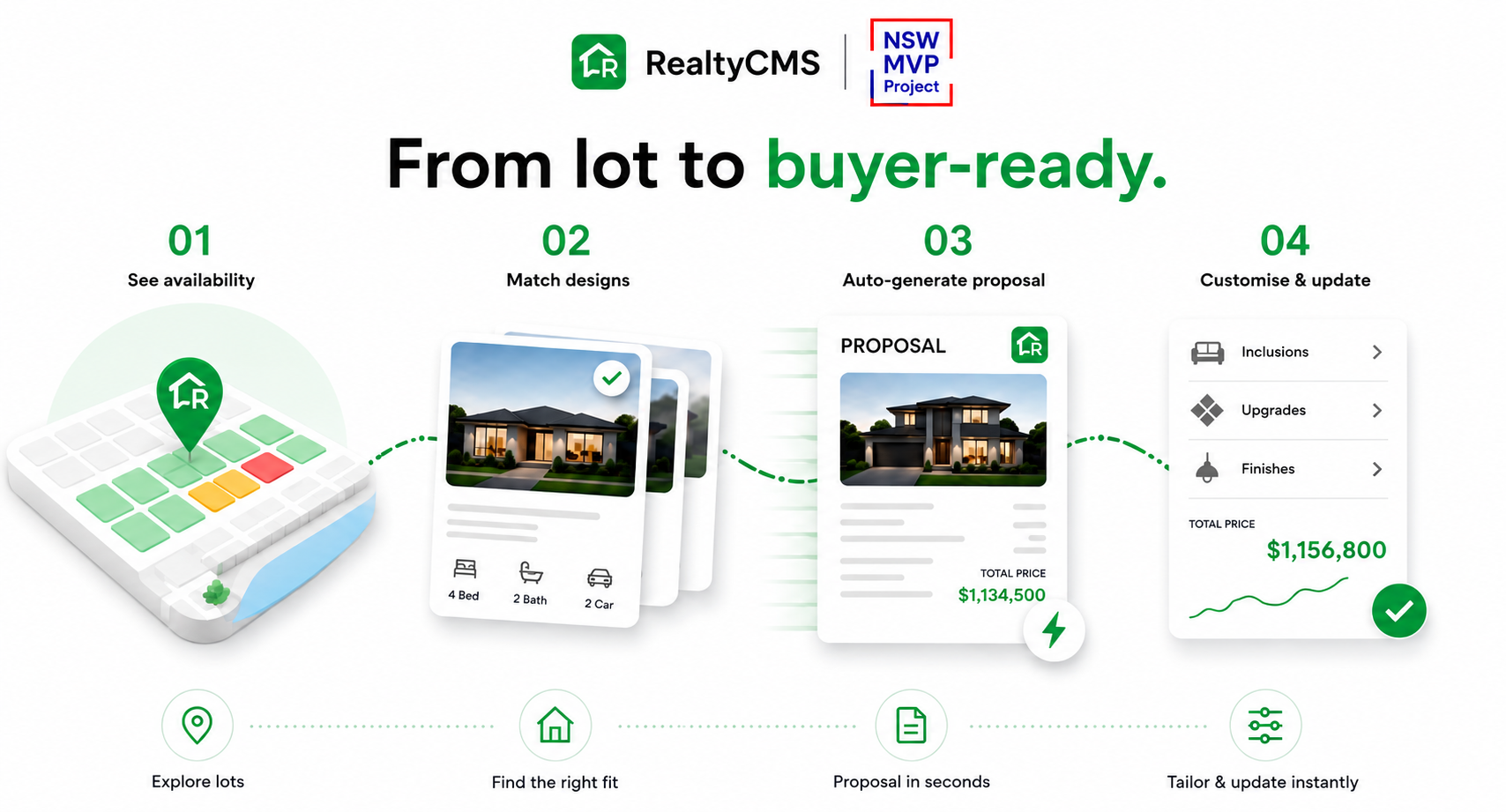
Modern sales teams are starting to treat House & Land Packages differently.
They are not just creating one-off brochures.
They are building repeatable workflows that turn available inventory into clear, buyer-ready sales opportunities.
The problem is not the package. It is the process behind it.
For many teams, House & Land Package creation still depends on too much manual work.
A sales consultant might need to check one system for available lots, another spreadsheet for pricing, another folder for floorplans, another document for inclusions and another person for final confirmation.
By the time the package is ready to send, the buyer may have already moved on.
This creates a few common problems.
The first is speed. Buyers expect answers quickly. If it takes hours or days to put together a package, the sales conversation loses momentum.
The second is consistency. Different salespeople may describe the same package in different ways, use different pricing assumptions or send different versions of the same information.
The third is accuracy. Land availability changes. Prices change. Designs change. If packages are built manually, outdated information can easily keep circulating.
The fourth is visibility. Managers often cannot easily see which packages are being sent, which ones are generating enquiries and which stock is actually moving buyer conversations forward.
A modern sales workflow needs to solve all four.
1. Start with clean inventory, not just more inventory
The best sales teams do not begin by asking, “How many listings do we have?”
They ask, “How usable is our inventory?”
For House & Land Packages, usable inventory means the sales team can quickly see the details that matter when building a package.
That includes:
Lot size.
Frontage.
Depth.
Orientation.
Estate or stage.
Title status.
Expected settlement.
Current availability.
Land price.
Design suitability.
Package price.
Key inclusions.
Developer requirements.
Sales status.
If this information is scattered across spreadsheets, emails and folders, the sales team is forced to do admin before they can do sales.
Clean inventory does not just mean data is stored somewhere. It means the data is structured in a way that helps the team act quickly.
A listing should not simply exist.
It should be ready to be matched, priced, packaged and sent.
That is the shift.
2. Match land and designs with rules, not guesswork
A strong House & Land workflow needs clear matching logic.
Not every home design suits every block. Sales teams need to know which designs fit which lots, and why.
That means thinking beyond “this looks like it might work.”
Modern teams build clear rules around things like frontage, lot depth, setbacks, orientation, estate guidelines, design width, floorplan type, facade options and buyer preferences.
For example:
A 10.5m frontage lot may only suit certain designs.
A corner lot may need a different facade approach.
A buyer looking for four bedrooms may not care about every design in the library.
A first-home buyer may need a very different package from an investor or upgrader.
The more clearly these rules are defined, the faster the sales team can move.
Instead of manually searching through every design, they can quickly narrow the options to what actually makes sense.
This is where modern sales teams gain speed. They are not starting from a blank page every time a buyer makes an enquiry. They have a system for turning available lots into relevant package options.
3. Make pricing clear enough for a buyer to act
Pricing is one of the biggest friction points in House & Land sales.
A buyer does not just want to know “from $X”.
They want to understand what that price actually includes.
Is the land included?
Are site costs included?
Is the facade included?
Are upgrades included?
Are developer requirements included?
Are there assumptions behind the price?
Is the package still available at that price?
If a package is unclear, the buyer will hesitate. And when buyers hesitate, sales teams spend more time explaining instead of progressing the conversation.
A buyer-ready package should make pricing easy to understand.
That does not mean every detail needs to be overloaded into the first message. But the core structure should be clear.
At minimum, the team should know:
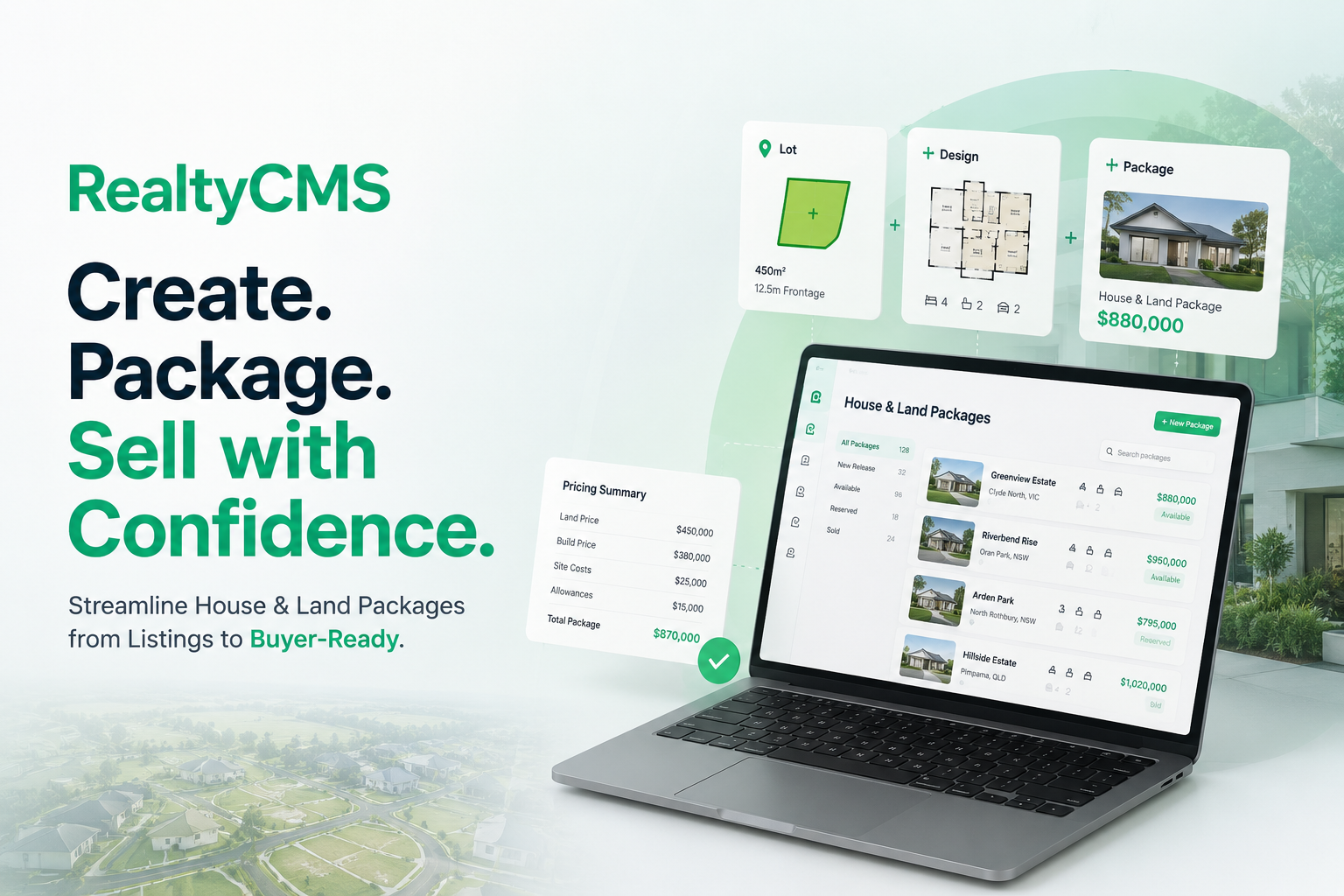
The land price.
The build price.
The estimated total package price.
Key inclusions.
Key exclusions.
Any assumptions.
Package validity.
Next step.
This is especially important when multiple salespeople are sending packages. Without a consistent pricing structure, the buyer experience becomes inconsistent and the team becomes harder to manage.
Modern sales teams create pricing guardrails so that packages are not only attractive, but also reliable.
4. Turn packages into sales assets, not admin files
A House & Land Package should not just be a PDF sitting in a folder.
It should be a sales asset.
That means it should help the buyer understand the opportunity quickly, and help the salesperson move the conversation forward.
A strong buyer-ready package usually answers five questions:
Where is it?
What is included?
Who is it right for?
Why does it make sense?
What should the buyer do next?
Too many packages focus only on information. The best packages create clarity.
For example, instead of simply listing “Lot 204, 350m², 4 bed, 2 bath, 2 car”, a stronger package helps the buyer understand the value of that combination.
It might highlight that the package is suitable for first-home buyers, downsizers, investors or growing families. It might show why the floorplan works well on that block. It might explain the lifestyle benefit of the location or the practical benefit of the layout.
Modern sales teams package information in a way that is easy to send, easy to read and easy to act on.
Because the goal is not just to create a document.
The goal is to create a better sales conversation.
5. Keep packages live after they are sent
One of the biggest risks with House & Land Packages is that they can become outdated quickly.
A lot may be reserved.
A price may change.
A design may no longer be suitable.
A promotion may end.
A buyer may receive a package that is no longer available.
This is why modern teams do not treat packages as static files.
They treat them as living sales assets.
A good workflow should make it clear when a package was created, what information was used, who sent it, which buyer received it and whether anything has changed since then.
This matters because sales teams often work across fast-moving inventory.
If the team cannot easily see which packages are active, which ones have been sent and which ones need updating, they create unnecessary risk.
The better approach is to keep package information connected to live inventory and sales activity.
That way, when availability changes, the team can respond quickly.
When pricing changes, the team can update confidently.
When a buyer asks a question, the salesperson can answer from the latest information.
Speed matters, but accuracy matters just as much.
6. Measure the package workflow, not just the final sale
Modern sales teams do not only measure outcomes. They measure the steps that lead to outcomes.
For House & Land Packages, this means looking at more than just how many sales were made.
Teams should also be tracking:
How many packages were created.
How many were sent to buyers.
Which lots were packaged most often.
Which designs were used most often.
Which packages generated enquiries.
Which packages converted to appointments.
How long it took to create a package.
How long it took to respond to an enquiry.
Where buyers dropped off.
These metrics help teams improve the workflow.
For example, if a certain estate receives a lot of enquiries but few appointments, the issue may be pricing, presentation, location, inclusions or buyer fit.
If salespeople are taking too long to send packages, the issue may be inventory structure or manual admin.
If certain designs keep appearing in successful packages, the team may be able to build stronger templates around them.
The point is simple: what gets measured gets improved.
And for House & Land sales, the workflow before the sale is often where the biggest improvements can be found.
The best teams make complexity feel simple
House & Land Packages will always involve moving parts.
Land availability changes.
Buyer preferences change.
Pricing changes.
Design suitability changes.
Market conditions change.
But the buyer should not feel that complexity.
The buyer should feel clarity.
They should be able to look at a package and quickly understand what it is, where it is, what it includes, whether it suits them and what to do next.
That is what modern sales teams are building towards.
They are not just managing listings.
They are not just sending brochures.
They are not just reacting to enquiries.
They are creating a clearer path from inventory to buyer conversation.
The teams that do this well will move faster, present more consistently and give buyers more confidence at the exact moment they are deciding whether to take the next step.
Because in a competitive market, the best package is not always the one with the lowest price.
It is the one that is easiest to understand, easiest to trust and easiest to act on.
And that starts with the way the sales team manages the workflow behind it.